
Halloween Night in Western New York: A Calm-Dog Plan for the Doorbell, the Candy Bowl, and the Costumes
The maples on the side streets have already started turning, there was a frost advisory on the overnight forecast, and the seasonal aisle at every store between Rochester and Buffalo has been candy for three weeks. Halloween is about five weeks out. If you have a dog, that means one specific evening of the year when your front door opens forty times in ninety minutes while a pile of chocolate sits in a bowl at nose height.
We bake dog treats for a living, so we hear the aftermath every November. Somebody's beagle got into the leftover fun-size bars. Somebody's shepherd bolted past a costumed six-year-old and had to be chased down the block in the dark. Somebody's senior lab spent the whole night panting behind the couch. Almost none of it is bad luck. Most of it is a night the dog was never prepared for.
So here is the plan. Start it now, run it in small pieces between now and the end of the month, and trick-or-treat night becomes another Friday with a chewy treat in it.
Start With the Doorbell, Because That Is the Real Problem
For most dogs, Halloween is not scary because of costumes. It is scary because the doorbell - the single loudest trigger in the house - fires over and over with strangers behind it. Your dog has years of practice barking at that sound and being right every time. One night is not going to undo that. But you can change what the sound means.
Pick a spot away from the front door: a crate, a bed at the end of the hall, the back bedroom. That is the station. Ring your own doorbell, walk to the station, and pay your dog there with something genuinely good. Not a pat on the head. A real treat, broken into pieces so you get several repetitions out of one biscuit.
Do ten reps a night. Within a week, plenty of dogs will hear the bell and trot to the station on their own, because the station is where the food happens. That is the whole trick. You are not teaching quiet, you are teaching a destination.
Ring, move to the station, pay. Every single time, for the first few nights.
Break treats small. Ten small pieces teach more than one big biscuit.
Once the dog beats you to the station, start adding the door opening and closing.
Add a helper in a hat and a mask in the last week, so the shape of a stranger is not brand new on the 31st.
If your dog is genuinely reactive at the door, do not spend Halloween trying to fix it live. Put the dog in a back room with a closed door, a fan or a TV for sound cover, and something to chew. There is no prize for making a nervous dog greet ninety strangers.
The Candy Bowl Is the Part That Sends People to the Emergency Vet
Chocolate is the one everybody knows, and it deserves the reputation. The trouble is theobromine, which dogs process far more slowly than we do. Dark and baking chocolate carry much more of it than milk chocolate, so a small dog in a bag of dark chocolate is a far bigger problem than the same dog licking a smear of milk chocolate off a wrapper. Signs to watch for are vomiting, diarrhea, restlessness, a racing heart, and tremors.
The one that catches people off guard is xylitol, a sugar substitute that shows up in sugar-free gum, mints, some peanut butter cups, and a growing share of sugar-free candy. In dogs it can cause a sharp drop in blood sugar and liver damage, and it does not take much. Read labels on anything sugar-free before it goes in a bowl the dog can reach.
Then there is the quiet third category: wrappers, lollipop sticks, and whole bags. Foil and plastic do not digest. A dog who swallows a fistful of wrappers can end up with an obstruction days later, long after the candy panic has passed.
Bowl up high, or in a cabinet, never on the entry table or the coffee table.
Kids sort their haul on a countertop or a table with the dog out of the room.
Raisins and grapes in the trick-or-treat bag go straight in the trash - both are linked to kidney failure in dogs.
Sweep the front walk and lawn on November 1st. Dropped candy is everywhere.
Program your vet's number and an emergency clinic number into your phone before the 31st, not during it.
If you think your dog ate chocolate or anything sugar-free, call your veterinarian or an emergency clinic right away with the wrapper in your hand. Weight, type, and rough amount are the three things they will ask for, and having the package saves everyone time.
Give the Dog Something of Their Own
Every dog in America watches their family carry buckets of food past them on Halloween and eat it on the living room floor. It is an unreasonable thing to ask of an animal that spends its whole day thinking about food.
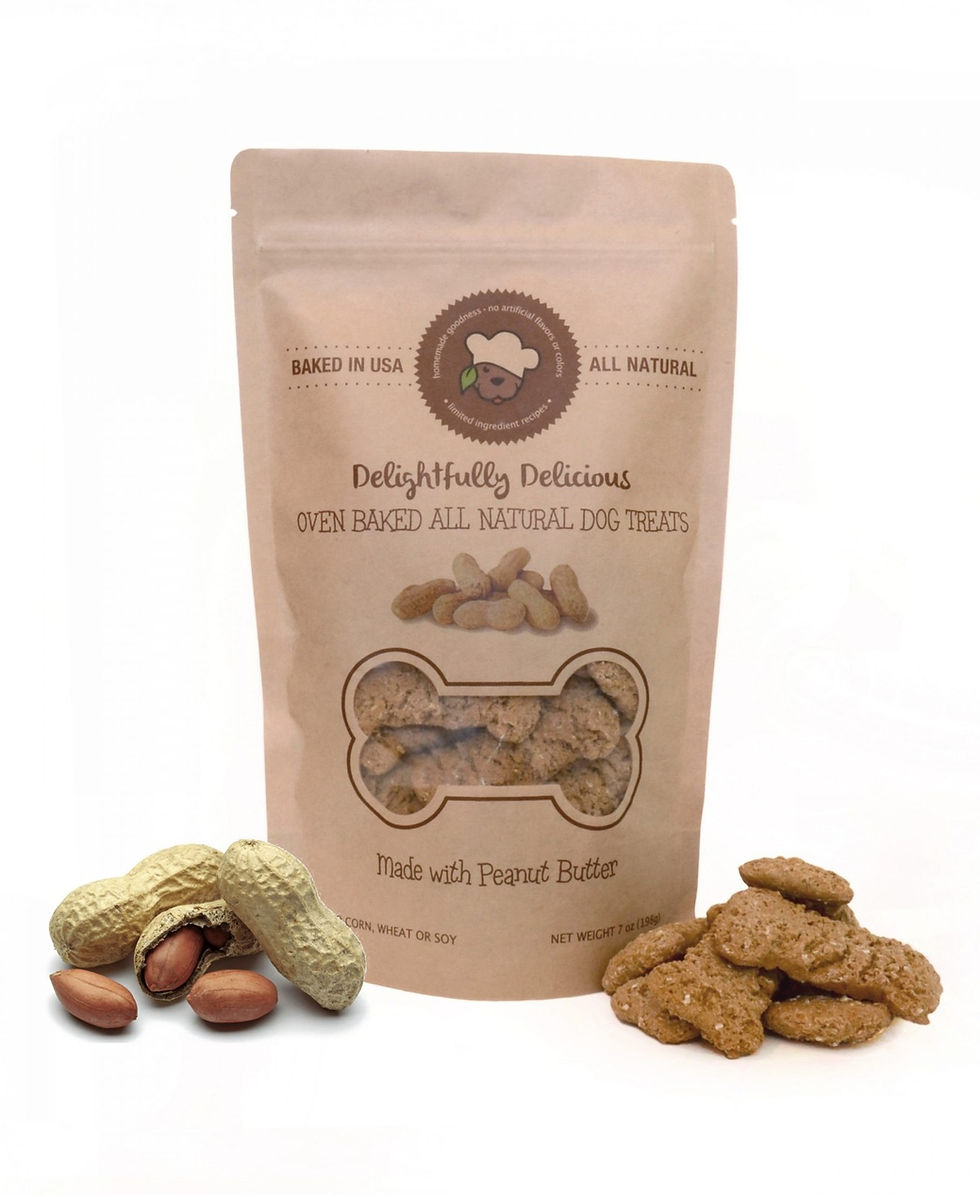
So build the dog into the night. Delightfully Delicious biscuits are oven baked in small batches with limited-ingredient recipes, no corn, wheat, or soy, and no artificial flavors or colors, which is exactly what you want in the treat you are handing out ten or twenty times in one evening. The organic pumpkin recipe is the seasonal favorite around here for obvious reasons, and the peanut butter and organic sweet potato bags do the same job for dogs who are not pumpkin people.
A few ways we see people use them on Halloween night:
The doorbell station payout - a broken piece every time the bell rings and the dog goes to their spot.
A scatter hunt in the back yard or a back room during the busiest half hour, so the dog is sniffing instead of listening.
A biscuit in a rubber toy with a little plain pumpkin puree or peanut butter smeared around it, frozen that morning.
The costume payment, if you insist on the costume. More on that below.
Treats are treats, not dinner. The usual guidance is to keep treats to roughly a tenth of a dog's daily calories, and on a night when you are handing out pieces constantly, that means breaking biscuits down small and trimming dinner a bit. A dog does not count pieces. They count that the food kept coming.
Costumes: Optional, and the Dog Gets a Vote
Some dogs genuinely do not care. Some dogs freeze the second fabric goes over their shoulders, and a frozen dog is not a happy dog in a cute photo, whatever the caption says. The test is simple: put the costume on, hand over a treat, and watch what the dog does in the next twenty seconds. If they move around normally and beg for another piece, you are fine. If they go still, tuck their tail, or start scratching at it, the costume is a no.
Nothing that covers the eyes, ears, or nose, and nothing that restricts the mouth.
No elastic tight around the neck or legs. Check for chew-off pieces, bells, and dangling bits.
A bandana or a light seasonal collar counts as a costume and costs the dog nothing.
Never leave a costumed dog unsupervised, even for a few minutes.
A safety note for the WNY in this: it gets dark early here at the end of October, and trick-or-treat hours land right in it. If your dog is out front with you, a reflective harness, a light-up collar clip, and a short leash do more for their safety than any costume. Dark dog plus dark street plus distracted drivers is the actual risk of the evening.
Doors, Gates, and the Escape You Do Not See Coming
The busiest night of the year for the front door is also the night dogs slip out. A dog who has never once bolted will do it when the door is open, the porch is crowded, and everything smells like other people. Once they are out, they are loose in the dark on a night when cars are creeping around looking at houses instead of at the road.
Keep the dog behind a closed interior door or a baby gate, not just behind your legs.
Hand out candy from the porch or the driveway with the front door shut, if you can. It removes the problem entirely.
Check that the collar and the ID tag are on and readable, and that the microchip registration has your current phone number.
Latch the gate, and check it again after any guests come through the yard.
One more thing: keep the dog away from jack-o'-lanterns with real candles and away from strings of decorations with cords. A happy tail at nose height and an open flame do not mix, and chewed cords are a real risk with a bored dog on an overstimulating night.
A Simple Countdown
You do not need a training program. You need about ten minutes a day between now and the 31st.
Five weeks out: pick the station and start doorbell reps with treats. Check the collar, tag, and chip info.
Three weeks out: add the door opening. Try the costume on for twenty seconds and take the dog's vote.
Two weeks out: get the treat bag and a stuffable chew toy in the house. Have a helper in a mask ring the bell.
One week out: decide where the dog will be on the night - back room, crate, or with you - and practice it once.
Night of: dog settled before 5 p.m., candy up high, treats in your pocket, vet's number in your phone.
That is it. Halloween goes from a night you brace for to a night your dog thinks is great, because in your dog's version of the evening, a bell keeps ringing and biscuits keep appearing.
Delightfully Delicious bakes all-natural, limited-ingredient dog treats right here in Western New York - oven baked, no corn, wheat, or soy, and nothing artificial, in recipes like organic pumpkin, peanut butter, apple and cinnamon, and organic sweet potato. If you want your dog stocked up before trick-or-treat night, reach out through our website and we will help you pick the right bag for your pup. Have a safe, boring, wonderfully uneventful Halloween.


Comments